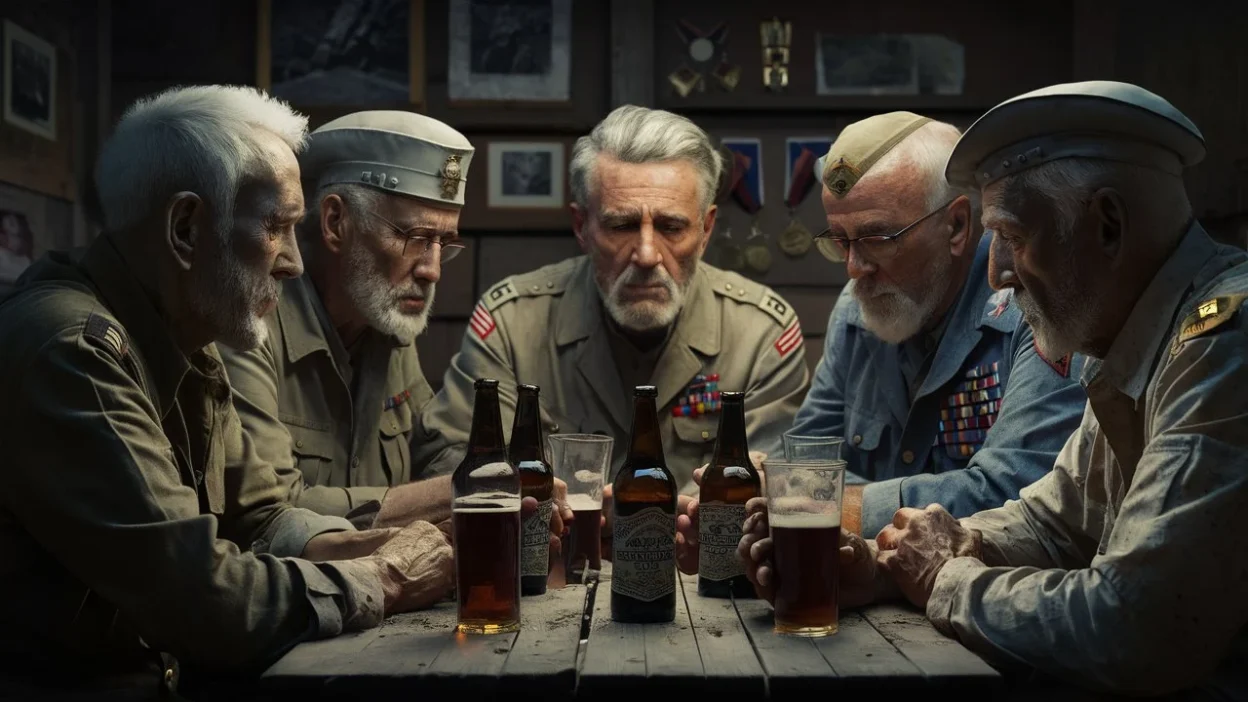
War stories are powerful reminders of courage, sacrifice, and the strength of the human spirit. These stories show us how ordinary people become heroes during the hardest times.
In this collection, you will read simple, clear, and emotional war stories that anyone can understand. Each story is 400 words, filled with bravery, hope, and lessons that stay with you. Every story ends with a strong moral to inspire readers of all ages.
Story 1: The Boy Who Carried the Flag
Twelve-year-old Ayan lived in a quiet village that suddenly turned into a war zone. Planes roared above, soldiers rushed through the streets, and his peaceful world changed overnight. But Ayan wasn’t afraid—not because he was brave, but because he believed his country needed him.
Ayan’s father was a soldier who had been away for months. His last words to Ayan before leaving were, “Protect our home with courage, my son.” Ayan held those words close to his heart.
One morning, Ayan saw soldiers trying to move forward, but enemy gunfire kept pushing them back. Their flag had fallen from the hands of a wounded soldier. The sight of the fallen flag broke Ayan’s heart. Without thinking, he ran toward it.
Bullets flew around him, dust filled the air, and soldiers shouted for him to stop. But Ayan didn’t look back. He grabbed the flag, held it tightly, and climbed onto a broken wall. The flag rose high again.
Seeing the flag, the soldiers regained their courage. They pushed forward with new strength, protecting Ayan as they advanced. The enemy retreated slowly, shocked by the small boy’s bravery.
Ayan stood tall, waving the flag until the ground was safe again. The captain approached him with tears in his eyes.
“You reminded every soldier here why we fight,” he said.
Later, when Ayan’s father returned home, he heard what his son had done. He hugged Ayan tightly and whispered, “You protected our home better than I ever could.”
Moral:
Courage doesn’t come from age or strength—it comes from the heart.
Story 2: The Soldier and the Little Bird
In a silent forest near the battlefield, a tired soldier named Farhan sat under a tree. His uniform was torn, his face was dusty, and his heart felt heavier than his backpack. He hadn’t seen his family in months. The war had drained his hope.
As he closed his eyes, he heard a faint sound. A tiny bird with an injured wing hopped toward him. Farhan gently picked it up. The bird trembled with fear, just like he did.
Farhan tore a small piece from his bandage and wrapped it around the bird’s wing. The bird chirped softly, as if thanking him. Farhan smiled for the first time in days.
Every day after that, the bird visited him. It became his friend, his little reminder that life still existed beyond war. While bombs exploded and guns fired, the bird chirped, bringing peace to his heart.
One day, when Farhan felt completely broken, the bird did something surprising. It flew up—its wing healed—and circled above him. Farhan stared in amazement.
“Even you are free now,” he whispered.
The bird flew ahead, singing loudly, as if guiding him. Farhan followed the sound through the forest. Soon he reached a hidden path that led him safely back to his unit. That path saved his life.
The next morning, as the sun rose, the bird sat on his shoulder again. Farhan saluted the tiny creature.
“You reminded me that hope always finds a way,” he said.
Moral:
Even the smallest act of kindness can bring hope in the darkest times.
Story 3: The Brothers on the Battlefield
Sameer and Daniyal were brothers who had joined the army together. Sameer was older, calm, and wise, while Daniyal was young, energetic, and always smiling. They promised their mother they would protect each other no matter what.
During a fierce battle, enemy forces pushed their unit into a damaged building. Smoke filled the air, and the ground shook with explosions. In the chaos, the brothers got separated.
Sameer searched for Daniyal desperately, shouting his name. At last, he found him trapped under a fallen metal beam. Daniyal was injured but conscious.
“Bhai, leave me… you need to survive,” Daniyal whispered.
Sameer shook his head. “Never. I promised Ammi.”
With all his strength, Sameer lifted the beam. He carried Daniyal on his back as gunfire echoed around them. Step by step, he moved toward safety.
Just when Sameer thought he could no longer continue, another explosion shook the ground. Soldiers rushed to help them. Together, they pulled the brothers to safety.
Later, at the medical tent, Daniyal held Sameer’s hand and said, “You saved me twice—once when we were kids, and now again.”
Sameer smiled. “Brothers never break their promises.”
Moral:
Family bonds give us strength even in the toughest battles.
Story 4: The Nurse Who Stayed Behind
Amina was a young nurse working in a small hospital near the border. When the war began, many people fled, but Amina chose to stay. She believed that even in the hardest times, someone had to care for the wounded.
One night, the hospital shook as explosions echoed nearby. Most of the medical staff evacuated, but Amina refused to leave her patients. There were old men, injured children, and soldiers who could not move. She looked at each of their faces and whispered, “I won’t leave you.”
With only a lantern and a small medical kit, Amina moved from bed to bed. She cleaned wounds, gave water, and whispered comforting words. Outside, the battle grew louder, but inside, Amina created a circle of calm.
Suddenly, a young soldier staggered in, bleeding heavily. Amina rushed to him, pushing her fear aside. She worked tirelessly to stop the bleeding and save his life. Hours passed, and her hands shook with exhaustion, but she kept going.
At dawn, enemy soldiers entered the hospital. Amina stood in front of her patients, blocking the way. “These people are wounded. They are no threat,” she said firmly. The enemy commander looked at her bravery and ordered his men to leave the hospital untouched.
A few days later, the fighting ended in that area, and help finally arrived. One of the rescued soldiers said, “We survived because she never gave up on us.”
Amina smiled softly. She didn’t fight with weapons, but her courage was just as powerful.
Moral:
True bravery is helping others even when you are scared yourself.
Story 5: The Secret Tunnel of Hope
In a town surrounded by war, a group of children found themselves trapped in their school. Their teacher, Sir Bilal, tried to keep them calm, but food and water were running out. The children sat close together, frightened by the sounds of tanks and gunfire outside.
Sir Bilal remembered an old legend about a hidden tunnel beneath the school—a tunnel built long ago for emergencies. No one knew if it was real, but he had to try. He gathered the children and said, “Stay close. We are going to find a way out.”
They searched the storeroom and found a wooden hatch under a pile of dusty books. With trembling hands, Sir Bilal opened it. A dark tunnel stretched below. The children hesitated, but he reassured them, “I will protect you. Trust me.”
They slowly made their way through the tunnel, holding torches made from broken sticks wrapped in cloth. The path was narrow, but the air felt safer underground. The children whispered prayers as they walked.
Hours later, they saw light at the end. The tunnel opened into a quiet forest far from the battle. The children burst into tears of relief. Sir Bilal thanked God and hugged them all.
Rescue teams found them later, shocked to learn how they survived. The story of the hidden tunnel spread through the village, reminding people that even in the darkest times, hope can still be found.
Moral:
Where there is hope and courage, there is always a way out.
Story 6: The Soldier Who Refused to Hate
Captain Rahim had fought in many battles, but he carried one belief in his heart: War is between armies, not hearts. He never allowed hatred to blind him.
During a battle, Rahim’s unit captured an enemy soldier who was barely eighteen. The boy shook with fear as he whispered, “Please… don’t hurt me.” Rahim saw not an enemy, but a scared child.
He ordered his men, “Treat him kindly. He is someone’s son.”
Rahim brought the boy water and food. Slowly, the boy began to trust him. During the night, Rahim learned that the boy had been forced into the army. He missed his mother, his home, and the life he had lost.
When enemy forces attacked at dawn, Rahim protected the boy instead of abandoning him. They took shelter behind a wall. Bullets flew everywhere, but Rahim stayed by his side.
After the battle, the enemy boy said, “Why did you save me? I am from the other side.”
Rahim replied softly, “Humanity has no sides.”
Years later, that same boy—now a grown man—became a peace worker. He often told people, “I changed because a soldier showed me kindness in a place where kindness should not exist.”
Moral:
Kindness is stronger than hate, even in the middle of war.
Story 7: The Last Letter Home
Sajjad was a soldier stationed far from home. Every night, he wrote letters to his family—letters full of love, hope, and promises that he would return soon. His young daughter, Noor, loved reading his letters the most.
One day, during a fierce battle, Sajjad was injured while protecting his team. As he lay under the rubble, he reached into his pocket and found his last unfinished letter. His hands trembled, but he began writing again.
He wrote about Noor’s smile, his wife’s prayers, and his dream of seeing them again. He ended with, “If I do not return, remember that I loved you with all my heart.”
Hours later, rescue teams found him and rushed him to the hospital. He survived, but barely. When he finally woke up, his wife and daughter were standing beside him, crying with relief.
Noor held the letter tightly and said, “Papa, this is the most precious gift you ever gave me.”
Sajjad smiled weakly. “Because love is the strongest thing a soldier carries.”
Moral:
Love gives strength even when everything else is lost.
Story 8: The Village That Chose Peace
In a small valley surrounded by mountains, two enemy armies prepared to fight. The villagers feared their homes would be destroyed. Among them lived an older people man named Baba Kareem, known for his wisdom and calm heart.
One evening, the village council gathered. “If the armies fight here, everything will be lost,” a farmer said. “Our children, our homes, our fields—nothing will survive.”
Baba Kareem stood up slowly. “War destroys land, but it also destroys hearts. We must act before the fighting begins.”
The villagers listened closely.
“We will send a message—not with weapons, but with unity,” he said.
The next morning, the entire village—men, women, and children—walked toward the center of the valley. They carried no flags, no weapons, only white scarves tied to sticks. They stood between the two armies, forming a human chain.
The commanders were stunned. Civilians were never supposed to be caught in the middle of a war zone.
Baba Kareem stepped forward and shouted, “This valley is our home. We refuse to let it become a battlefield. If you fight, you will not only destroy us—you will destroy your own humanity.”
Silence fell. The wind blew gently. Children clung to their mothers. Soldiers on both sides lowered their weapons slightly.
After a long moment, one commander signaled his men to step back. The other commander followed. For the first time in years, the valley remained peaceful.
The villagers returned home safely, and news of their courage spread far beyond the mountains. People said, “They won a war without fighting.”
Moral:
Sometimes the greatest victory is choosing peace over conflict.
Story 9: The Lost Dog of the Battlefield
During a harsh winter war, soldiers struggled through snow and freezing winds. Among them was Haris, who missed home terribly—especially his loyal dog, Tofu. Tofu had been his companion since childhood and always comforted him during tough days.
One night, while on guard duty, Haris heard a faint barking sound in the distance. He thought he was imagining things, but the sound grew louder. Suddenly, out of the snowstorm came a small dog—thin, trembling, but alive.
Haris’s heart raced. “Tofu?” he whispered.
It was him.
The dog leaped into Haris’s arms, whining with joy. No one could explain how Tofu had traveled so far, but Haris didn’t care. For the first time since the war began, he felt warmth in his heart.
Tofu quickly became the entire unit’s companion. He slept beside injured soldiers, barked when danger approached, and brought comfort to everyone. Even during the darkest nights, his presence gave the soldiers courage.
One morning, enemy forces launched a sudden attack. Amid the chaos, Tofu ran ahead and warned the soldiers by barking loudly. His quick action helped the unit escape an ambush and reach safety.
After the war, Haris returned home with Tofu by his side. People called Tofu a hero, but Haris said, “He didn’t save just my life—he saved my spirit.”
Moral:
Loyalty and love can bring light even in the darkest battles.
Story 10: The Girl Who Collected Stars
In a war-torn town lived a young girl named Zara. Every night, she looked at the sky through broken windows and whispered, “One day, the stars will guide us to peace.”
Zara collected small glass pieces from the rubble—shiny ones that glittered under the moonlight. She called them “stars.” She kept them in a little wooden box she protected like treasure.
One evening, a group of soldiers entered the town searching for survivors. They found Zara sitting alone near the ruins of her home.
“What are you doing here?” a soldier asked gently.
“I’m collecting stars,” she replied.
The soldier knelt beside her, confused but touched. “Why stars?”
Zara smiled softly. “Because when the world is broken, we should keep pieces of light.”
The soldiers were moved by her words. They protected Zara and helped her find other surviving families. Zara shared her glass stars with the children, making them smile despite the destruction around them.
Months later, when the war finally ended, Zara placed her wooden box on a hill overlooking the rebuilt town. She opened it and let the glass stars fall into the grass.
“These stars will shine again in our hearts,” she whispered.
Her story spread far and wide, inspiring many people to rebuild with hope instead of fear.
Moral:
Even in broken times, a small light of hope can heal many hearts.
Conclusion
War stories remind us that even in the darkest moments, courage, kindness, and hope help people survive. These stories show that love, peace, and unity are stronger than any conflict, teaching us lessons that last forever.

I am Beatrix Potter, a storyteller who loves bringing the wonders of nature, imagination, and gentle magic to life. Through my stories, I share worlds filled with curious animals, quiet countryside adventures, and the kind of simple beauty that warms the heart. Here on magicstoris.com, I continue to inspire readers of all ages with tales that celebrate kindness, creativity, and the timeless joy of storytelling.