
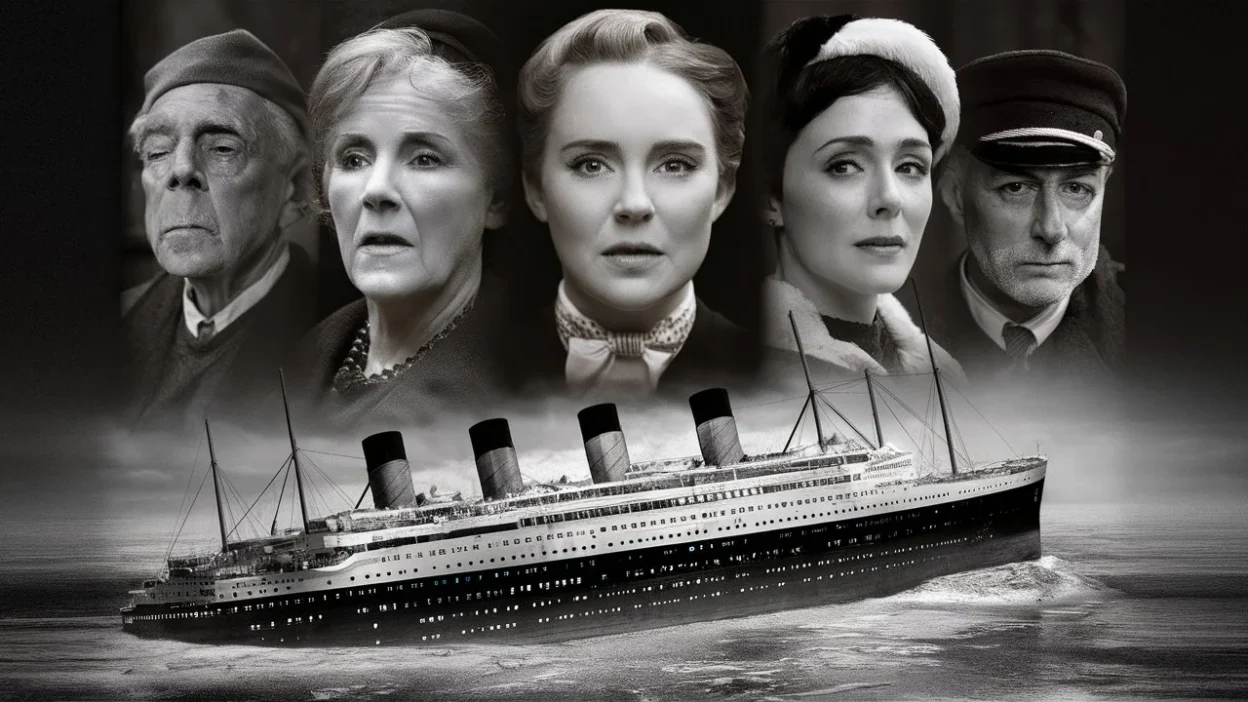
The sinking of the Titanic is one of history’s most unforgettable tragedies, but within it are true survivor stories filled with courage, hope, and strength. These tales show how ordinary people faced extraordinary danger and still found ways to hold on.
In this collection, you will read simple, easy-to-understand Titanic survivor stories that anyone can follow. Each story is 400 words long and ends with a clear moral to inspire readers of all ages.
Story 1: The Boy Who Held His Sister’s Hand
Eight-year-old Samuel and his little sister Elsie were traveling on the Titanic with their mother. The ship felt like a magical floating palace, and Samuel loved exploring the long hallways. But on the night the ship hit the iceberg, everything changed. Loud noises filled the air, people screamed, and Samuel felt his heart race.
Their mother grabbed their hands and rushed them toward the lifeboats. The freezing wind cut through their clothes. Samuel could hardly breathe, but he held tightly to Elsie’s hand, promising her that everything would be okay.
When they reached the lifeboats, the officers shouted, “Women and children first!” Their mother lifted them into the boat, but there was no space left for her. She smiled bravely, telling them, “I’ll be on the next one.” Samuel felt his throat tighten as the boat was lowered into the ocean.
Elsie cried softly, shaking from fear and cold. Samuel wrapped his arms around her and whispered stories to distract her. He told her about a warm house waiting for them, with blankets and hot tea. He described how their mother would soon join them. Although he didn’t know if it was true, he knew his sister needed hope.
Hours passed. The cold water looked endless, and the cries from the ship grew silent. Samuel kept holding Elsie close until the rescue ship, the Carpathia, arrived. When they were lifted aboard, Samuel felt relief — but also heavy sadness. Their mother never made it.
Still, Samuel remembered her words: Be brave. Take care of your sister.
And he did. From that day on, Samuel promised to live the life his mother wanted for them — a life filled with kindness, courage, and hope.
Moral: Even in the darkest moments, courage and love can guide us forward.
Story 2: The Musician Who Refused to Stop Playing
Harold was one of the musicians on the Titanic, a gentle man who loved his violin more than anything. He believed music could bring peace to people, even on the busiest nights. When the ship hit the iceberg, Harold and the rest of the band felt the strange vibration. But instead of panicking, they grabbed their instruments.
As passengers rushed around, frightened and confused, Harold began to play a calm, soothing tune. The other musicians joined him. At first, only a few people noticed the music, but slowly, many stopped crying. Some whispered prayers, others hugged their loved ones. The music wrapped around them like a warm blanket.
One officer asked Harold, “Why are you still playing? You should get to the lifeboats.”
Harold simply smiled and said, “If this is my last night, I want it to bring peace to others.”
His bravery inspired the other musicians, and they continued playing as the ship tilted. Harold’s fingers were freezing, making it hard to move them across the strings, but he didn’t stop. He played for the mothers comforting their children, for the husbands saying goodbye, and for the people who felt helpless.
A young woman named Clara watched from a lifeboat as Harold’s music echoed over the water. She never forgot how the soft notes made her feel truly safe, even in such a terrible moment.
The ship eventually went under, and Harold lost his life. But his music — and his bravery — lived on in the hearts of the survivors. Years later, Clara told her children, “That man played so we would not feel alone. His music helped save my heart.”
Moral: True bravery is giving hope to others, even when you are afraid yourself.
Story 3: The Cook Who Saved Dozens
Charles was a cook on the Titanic, known for his kindness and his big laugh. He loved serving warm meals to passengers and telling funny stories to brighten their day. When the ship hit the iceberg, Charles didn’t freeze in fear — instead, he jumped into action.
He ran to the lifeboat area and started helping people in. Many passengers were terrified and didn’t know where to go. Charles guided them, lifted children, and encouraged mothers who were crying. “You’ll be all right,” he said firmly. “Get in, get warm, and stay strong.”
But when all the boats were filled, Charles realized there was no space left for him. The ship was sinking faster now, and the freezing wind stung his face. Still, he didn’t give up. He grabbed life jackets and handed them to others who were struggling.
When the Titanic finally disappeared beneath the waves, Charles was thrown into the icy water. Most people could not survive for long in the cold, but Charles had prepared himself — he had drunk warm liquor and stayed moving, keeping his body from freezing too quickly.
He spotted an overturned lifeboat and swam toward it with powerful strokes. With great effort, he climbed onto the hull, joining other survivors who were shivering uncontrollably. Charles encouraged them, saying, “Stay awake! Keep talking! Don’t let the cold take you!”
He told jokes, sang songs, and slapped his arms to keep warm. His energy kept everyone around him awake long enough to be rescued. Hours later, when the Carpathia arrived, Charles helped others get aboard before he climbed in himself.
He survived — and helped save many others by keeping their hope alive.
Moral: Helping others, even when you’re in danger, is the true meaning of strength.
Story 4: The Mother Who Refused to Leave Her Children
Margaret was traveling on the Titanic with her two young daughters, Anna and June. They were excited for a new life in America, and the girls spent their days exploring the ship’s decks, laughing and chasing each other. But on the night the Titanic struck the iceberg, everything changed in an instant.
Margaret woke to the sound of rushing feet and distant shouting. When she opened their cabin door, a steward told her, “Put on your life jackets. Go to the deck immediately.” Margaret’s hands shook as she helped the girls dress. She lifted June into her arms and held Anna’s hand tightly as they hurried up the stairs.
When they reached the lifeboats, officers were shouting, “Women and children first!” but the crowd was growing larger and more frightened. Anna clung to her mother and cried, “Don’t leave us, Mama!” Margaret knelt, holding her daughters close.
A sailor lifted Anna into a lifeboat. Margaret tried to hand June to him, but June wrapped her arms around her mother’s neck. “I won’t go without you!” she sobbed. Margaret’s heart ached. She knew the rule — children needed to go first — but she also knew her daughter would panic without her.
She gathered both girls in her arms and said, “We will stay together.” A nearby officer saw their fear and made a quick decision. “Take all three!” he said. “Make room!”
The lifeboat was crowded, but the passengers leaned aside and helped pull Margaret and June in. As the boat lowered, Anna whispered, “I thought we would be separated.” Margaret kissed their foreheads and said, “A mother never leaves her children.”
The hours that followed were freezing and terrifying. The girls cried as the Titanic disappeared into the dark water. Margaret wrapped her arms around them and told stories of home to keep their minds from fear. When the rescue ship arrived, Margaret carried June and walked with Anna, refusing help until she knew her daughters were safe.
Margaret never forgot the night she almost lost them, and her daughters never forgot the strength of a mother’s love.
Moral: A mother’s love gives courage even in the darkest moments.
Story 5: The Cabin Boy Who Never Gave Up
Tommy was a fourteen-year-old cabin boy on the Titanic. His job was simple but important — delivering messages, guiding passengers, and helping wherever he could. He loved working on the great ship and dreamed of becoming a sailor one day. But on the night the iceberg struck, his courage was tested in ways he never imagined.
Tommy heard the crash while he was cleaning the hallway. At first, he thought it was nothing, but soon passengers began pouring out of their rooms, frightened and confused. Without hesitating, Tommy began guiding them up the stairs. “This way, please! Stay calm!” he shouted, though his own legs trembled.
He helped an old couple carry their bags. He returned again and again to the lower decks, even when the icy water began rising. One sailor grabbed his arm and said, “Stop going down there! You’ve done enough!” But Tommy shook his head. “People still need help.”
On his last trip down, he found a small boy crying on the staircase. Tommy lifted him onto his back and climbed toward the upper deck, each step harder than the last as the ship tilted. The boy wrapped his arms around Tommy, whispering, “Please don’t let me fall.”
“You’re safe,” Tommy said, even though he wasn’t sure.
When they reached the deck, a lifeboat was being lowered. A woman, frantic and desperate, said, “That’s my son! Please get him in!” Tommy placed the boy inside and smiled. “You’re going to be okay, little man.”
A sailor yelled, “You too, cabin boy! There’s space!” But Tommy stepped back. “Let someone else take it,” he said. “I’ll wait.”
Minutes later, the ship lurched violently. Tommy grabbed a floating piece of debris as he fell into the freezing water. With trembling arms, he held on, refusing to give up. Hours passed before the Carpathia finally rescued him. He survived — tired, freezing, but alive.
Tommy’s bravery was remembered by many. People said he had the heart of a true sailor long before he ever became one.
Moral: Courage means helping others, even when you are afraid.
Story 6: The Two Friends Who Stayed Together
Emma and Lucy were best friends traveling on the Titanic with their families. They were both twelve years old and loved exploring together. Every day they walked the ship’s decks, imagining grand adventures. But when the Titanic hit the iceberg, their real adventure began.
The girls were separated from their families in the confusion. People ran in every direction, shouting and crying. Emma grabbed Lucy’s hand. “Don’t let go!” she shouted. The ship tilted slightly, and the girls stumbled as they ran toward the lifeboats.
An officer yelled, “Women and children first!” The boat was almost full when Emma and Lucy reached it. A sailor lifted Lucy inside, but when he turned to grab Emma, the space was already taken by another passenger.
Lucy screamed, “Emma! Get in! Please!”
Emma shook her head bravely. “It’s okay! I’ll find another boat!” But her voice cracked with fear.
The lifeboat began to lower, and Lucy cried until she could no longer see her friend on the deck. She held her head in her hands, trembling. She kept whispering her friend’s name, praying Emma would survive.
Emma searched for another lifeboat but found none left. Her heart pounded. Suddenly, she saw a collapsible boat that had overturned in the water. People were climbing onto it. She took a deep breath and jumped, landing in the freezing sea. The cold burned her skin like fire. She pushed through the icy waves and grabbed onto the overturned boat.
Hours passed before Lucy spotted Emma again — alive — when the Carpathia rescued them both. The moment they were reunited, they hugged tightly and cried.
From that day on, they promised nothing would ever break their friendship.
Moral: True friendship stays strong, even in the hardest times.
Story 7: The Passenger Who Shared His Coat
James was a quiet man traveling alone on the Titanic. He didn’t have family with him, but he enjoyed watching the ocean and reading books on deck. When the ship hit the iceberg, he felt the jolt and went outside to see what had happened.
He saw fear everywhere — mothers crying, children shaking, men shouting. But among the crowd, he noticed a small girl standing alone, shivering. Her thin dress fluttered in the freezing wind. James walked to her and knelt. “Where is your family?” he asked.
“I…I don’t know,” she whispered, tears running down her cheeks.
James took off his warm coat and wrapped it around her shoulders. “You stay warm, all right? I’ll help you find a lifeboat.”
He lifted the girl into his arms and searched the deck, calling out for her parents, but no one answered. Finally, he reached a lifeboat with only a few spaces left. A sailor reached for the girl. James handed her over gently.
“Get in, sir!” the sailor said.
James shook his head. “Let someone else take the space. I’ll stay.”
The lifeboat lowered, and the little girl looked up at James. She said nothing, but her eyes were full of gratitude and fear. James smiled sadly and waved.
Later, as the ship sank, James found a piece of floating debris and held on. The icy water drained his strength quickly, but he thought of the girl in the lifeboat — safe because he had acted. That gave him comfort.
When the rescue ship arrived, James was barely conscious, but he survived. When the girl spotted him on the Carpathia, she ran to him and hugged him tightly.
“You saved me,” she whispered.
James smiled weakly. “You reminded me that kindness matters.”
Moral: A simple act of kindness can change — or save — a life.
Story 8: The Fireman Who Fought the Flooding
Patrick worked deep below the decks of the Titanic as a fireman, feeding the giant boilers that powered the ship. His world was always hot, loud, and filled with steam. When the ship struck the iceberg, Patrick felt the shudder even before the alarms started. He rushed with the other firmen to see the damage.
Cold water was pouring in fast. The temperature difference stung his skin like ice needles. Patrick knew something terrible had happened, but there was no time to panic. “Close the watertight doors!” the officer shouted. Patrick and the crew worked together, pushing, pulling, and securing the heavy doors to slow the flooding.
He could have run to save himself, but Patrick stayed behind to help the others escape. He guided younger workers up the ladders. “Go! Don’t stop!” he shouted, even as the water rose behind him.
By the time he reached the upper decks, the ship was tilting. People were screaming and running in every direction. Patrick felt exhausted, but when he saw a group of passengers struggling to climb a steep part of the deck, he rushed to help them too. He lifted a frightened boy onto his shoulders and held the hands of two old women, guiding them step by step.
When they reached a lifeboat, there was space for the passengers but not for Patrick. He smiled and said, “You go. I’ll be fine.” He turned away before they could argue.
Minutes later, the Titanic lurched violently, tossing Patrick into the water. The shock of the icy sea stole his breath, but he spotted a floating wooden crate. He grabbed it and held on with numb fingers. Hours passed, and he fought to stay awake.
When the rescue ship arrived, Patrick was barely conscious. A sailor pulled him aboard, saying, “You’re a tough one.”
Patrick survived, not because he was lucky, but because he refused to give up — and because he cared more about saving others than himself.
Moral: True strength is using your courage to help others, even in danger.
Story 9: The Girl Who Trusted a Stranger
Lily was only ten years old when she boarded the Titanic with her aunt. Her parents were waiting for her in America, and she couldn’t wait to see them. But when the Titanic hit the iceberg, she and her aunt were separated in the chaos. Lily stood alone on the deck, shaking as people ran around her.
A tall woman named Mrs. Brown noticed her. “Sweetheart, where’s your family?” she asked gently. Lily burst into tears. “I—I don’t know!”
Without hesitation, Mrs. Brown took Lily’s hand. “Stay with me. I won’t leave you.” Lily felt a little calmer with someone beside her. Mrs. Brown guided her through the frightened crowd toward the lifeboats.
The officers shouted, “Women and children first!” Mrs. Brown lifted Lily into the boat, but when she tried to get in herself, the officer said, “Only one more can fit.” Mrs. Brown stepped back and whispered, “Go, darling. Your parents need you.”
Tears filled Lily’s eyes. “But you saved me! Please come with us!”
Mrs. Brown shook her head and smiled softly. “Be brave. I’ll be fine.”
As the lifeboat lowered, Lily watched Mrs. Brown grow smaller and smaller until she could no longer see her through the darkness. She hugged another passenger and cried quietly.
Hours later, when the rescue ship Carpathia arrived, Lily was carried aboard. She scanned the decks, searching for Mrs. Brown. To her astonishment, she saw her — alive — wrapped in a blanket, sipping warm tea. She had survived on another lifeboat that arrived later.
Lily ran to her and hugged her tightly. “I thought I’d lost you!”
Mrs. Brown smiled and said, “Kindness always finds its way back.”
They remained lifelong friends, and Lily never forgot the stranger who became her hero.
Moral: Sometimes the kindness of a stranger can change your whole life.
Story 10: The Man Who Lit the Darkness
George was an electrician on the Titanic. His job was to keep the ship powered, from the lights to the elevators. When the ship hit the iceberg, George felt the sudden jolt and hurried to the engine rooms. He immediately understood how serious it was.
Water was rushing in, and the ship was sinking faster than anyone expected. The officers told him, “We need the lights to stay on as long as possible.” Without lights, passengers would panic even more, and evacuation would be nearly impossible.
George and his team worked tirelessly, fighting the rising water as they tried to keep the electricity flowing. They used lanterns to see through the dark steam-filled rooms. Every second counted. George soaked in sweat and freezing water, but he kept going.
Up on the decks, passengers saw the glowing lights and felt a little less afraid. Mothers found their children. People found lifeboats. Officers gave clear directions. All because George and his team kept the ship from sinking into total darkness.
As the water finally reached the electrical panels, George yelled for his team to escape. “Go now!” he ordered. They hesitated, but he insisted. “Save yourselves!”
George rushed up the stairs behind them. By the time he reached the main deck, the ship was moments from going under. He jumped into the icy water, gasping from the cold. His body felt heavy, but he spotted a collapsible boat and swam toward it with all his strength.
A sailor pulled him aboard. George shivered violently, but he was alive. When dawn broke, he saw the rescue ship approaching. He closed his eyes, relieved.
George’s bravery kept thousands of passengers calm and guided during the darkest hours of the disaster.
Moral: Even small acts of duty can make a huge difference in saving others.
Conclusion
The Titanic tragedy will always be remembered, but these stories highlight something even greater than the disaster — the courage, kindness, and strength of the people who lived through it.
Each survivor faced fear, loss, and danger, yet they found hope and helped others when it mattered most. Their stories remind us that even in the darkest moments, humans can shine with bravery and compassion. May these tales inspire readers of all age.

I am Beatrix Potter, a storyteller who loves bringing the wonders of nature, imagination, and gentle magic to life. Through my stories, I share worlds filled with curious animals, quiet countryside adventures, and the kind of simple beauty that warms the heart. Here on magicstoris.com, I continue to inspire readers of all ages with tales that celebrate kindness, creativity, and the timeless joy of storytelling.